HISTORY
In 2003 October ,"Mobile
phone" was utilized by the majority of people in general, and
Apple quite a long while before declared its first iPhone and its iOS, the
organization Android Inc was established in Palo Alto, California. Its four
authors were Rich Miner, Nick Sears, Chris White, and Andy Rubin. The organization made contributes to financial
specialists 2004 that demonstrated how Android, introduced on a camera, would
associate remotely to a PC as Rubin said in 2013, "precisely the same
stage, OS we worked for cameras, that became Android for cellphones." In
2005, the following enormous section in Android's history was settled on the
choice was made to utilize Linux as the reason for the Android OS.
In 2003 October ,"Mobile phone" was utilized by the majority of people in general, and Apple quite a long while before declared its first iPhone and its iOS, the organization Android Inc was established in Palo Alto, California. Its four authors were Rich Miner, Nick Sears, Chris White, and Andy Rubin. The organization made contributes to financial specialists 2004 that demonstrated how Android, introduced on a camera, would associate remotely to a PC as Rubin said in 2013, "precisely the same stage, OS we worked for cameras, that became Android for cellphones." In 2005, the following enormous section in Android's history was settled on the choice was made to utilize Linux as the reason for the Android OS.
ANDROID LOGO
The now familiar logo for the Android OS, which resembles a mix of a robot and a green bug, was made by Irina Blok while she was utilized by Google. In 2013, Blok said that the main mandate that was given to her structure group by Google was to make the logo resemble a robot.
 |
| LOGO OF AN ANDROID |
One thing that Blok and
Google chose to do was to make the Android robot itself an open source venture
it's everything on the grounds that Google permits such changes under the
Creative Commons 3.0 Attribution License
ANDROID 1.0
In 2007,
Apple propelled the first iPhone and escort in another period in versatile
processing. At the time, Google was all the while chipping away at Android
covertly, however in November of that year, the organization gradually began to
uncover its arrangements to battle Apple and other portable stages. It utilized
the development of what was known as the Open Handset Alliance, which included
telephone creators like HTC and Motorola, chip makers, for example, Qualcomm and Texas Instruments,
and bearers including T-Mobile.
ANDROID 1.5 CUPCAKE
The first
official public code name for Android didn’t appear until version 1.5 Cupcake was released in 2009. It added quite a few new
features and improvements compared to the first two public versions, such as
ability to upload a video to YouTube.
 |
| ANDROID CUPCAKE |
ANDROID 1.6 DONUT
Google immediately propelled Android 1.6 Donut in Sept.2009. The new highlights included help for bearers that utilized CDMA-based systems. This permitted Android telephones to be sold by all bearers around the world.Other highlights like Quick Search Box and brisk flipping between the Camera, Camcorder, and Gallery to streamline the media-catch understanding. Doughnut additionally presented the Power Control gadget for overseeing Wi-Fi, Bluetooth, GPS, and so forth.
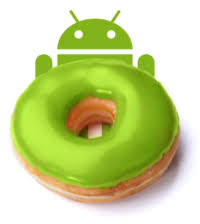
ANDROID DONUT
 |
| ANDROID DONUT |
ANDROID 2.2 FROYO
Android 2.2
Froyo ( "Frozen Yogurt") was formally propelled in May 2010. Cell
phones with Froyo introduced could exploit a few new highlights, including
Wi-Fi versatile hotspot capacities, pop-up messages by means of Android Cloud to
Device Messaging (C2DM) administration,
streak support, which is conveyed by from the outset by Google Nexus One. This
denoted another methodology for Google, with the organization working nearer
than at any other time with equipment maker HTC to feature unadulterated Android.
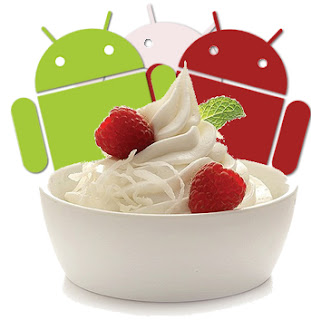 |
| ANDROID FROYO |
ANDROID 2.3 GINGERBEARD
Android 2.3 Gingerbread, propelled in Sept. 2010, is as of now the
most seasoned variant of the OS that Google still records in its month to month
stage rendition update page. As of Sept.13 2017 demonstrates that solitary 0.6
percent of all Android gadgets are right now running in some adaptation of Gingerbread. It bolsters close to handle correspondence (NFC)
capacities for cell phones. It likewise laid the basis for the selfie, by
including support for different cameras and video visit with Google Talk.
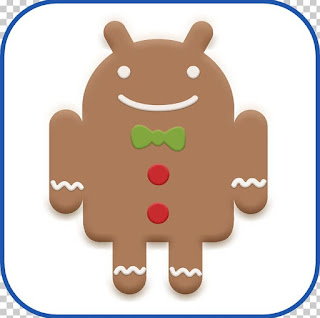 |
| VERSION 2.3 GINGERBEARD |
ANDROID 3.0 HONEYCOMB
Honeycomb was launched by Google for establishment just on tablets and other cell phones with bigger showcases than current cell phones. It was presented in Feb. 2011, alongside the Motorola Xoom tablets and included highlights, for example, an overhauled UI explicitly for huge screens, alongside a warning bar set on the base of a tablet's presentation.
At last, Honeycomb wound up being an adaptation of Android that was not so much required, as Google chose to coordinate the greater part of its highlights in its next major 4.0 variant, Ice Cream Sandwich.
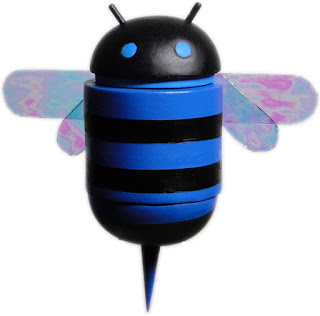 |
| VERSION 3.0 HONEYCOMB |
ANDROID 4.0 ICE CREAM SANDWICH
It released in Oct. 2011 the version of Android brought a number of new features for users. It combined with many features of tablet only. It includes a “favorites tray” on the home screen, along with the support for unlocking a phone by using its camera using facial sensor. In July 6, Google indicates that 0.7 percent of all Android devices are running of version Android 4.0. It includes support for all on-screen buttons, swipe gestures to dismiss notifications and browser tabs, and the ability to monitor your data usage over mobile and Wi-Fi.
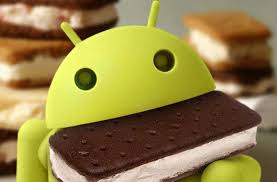 |
| VERSION 4.0 ICE CREAM SANDWICH |
ANDROID 4.4 KITKAT
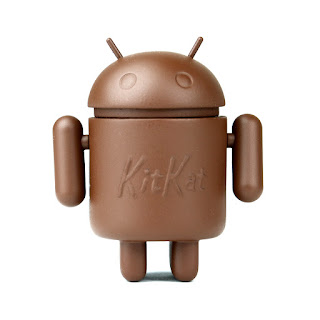
ANDROID KIT KAT
It was the first version of the OS
that used Google’s new Material Design language, which made liberal use of
lighting and shadow effects which is launched in 2014, The UI also got some
changes like revamped navigation bar, rich notifications for the lock screen
,dual-SIM, HD video calls, Device Protection even after a factory reset
and many more.
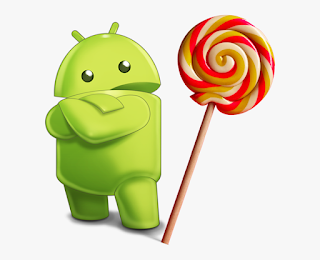
ANDROID 5.0 LOLLIPOP
ANDROID 6.0 MARSHMALLOW
It launched in Sept. 2013, the company released hints at its Google I/O conference that year, as 4.4 version would be “Key Lime Pie”. John Lagerling thought that it would not be a familiar enough name to use for Android 4.4 worldwide. Instead, he contacted Nestle, the creators of the KitKat bar and asked them if they could use the name for Android 4.4. Nestle agreed, and even released versions of its KitKat bar shaped like the Android robot mascot as part of a co-branding agreement with Google. KitKat didn’t have a much new features, but it did have one thing that is it was optimized to run on smartphones as 512 MB of RAM.
ANDROID 5.0 LOLLIPOP
Android 6.0 Marshmallow launched in 2015, Google used “Macadamia Nut Cookie” to describe it before the official Marshmallow announcement. It includes featured like scrolling app drawer, fingerprint bio-metric unlocking of a smartphone, USB Type-C support, Android pay, Google Now on tap and many more.
 |
| MARSHMALLOW |
ANDROID 7.0 NOUGAT
The version 7.0 of Google’s mobile OS launched in 2016 as “Android N” before Nougat was revealed by Google as “New York Cheesecake”. It has many features includes multi-tasking functions for bigger displays such as split-screen mode, switching between apps, enabled OEMs to support its Day Dream Virtual Reality platform with the pre-installed Nougat the Pixel, Pixel Xl, LG V20 was released by Google.
 |
| ANDROID 7.0 NOUGAT |
ANDROID 8.0 OREA
In March 2017, Google formally reported and discharged the primary designer see for Android O, otherwise called Android 8.0. Indeed, even before that discharge, Hiroshi Lockheimer, the senior VP of Android at Google, posted a GIF of an Oreo cake on his Twitter account in Feb. 2017. That was the principal strong clue that Oreo, the prevalent treat made of two chocolate wafers with a creme filling in the middle of, would surely be the official code name for Android 8.0.
In August, Google affirmed that Oreo would for sure be people in general name for Android 8.0. It is the second time that Google picked a trademarked name for Android (Oreo is claimed by Nabisco). In a break from its custom, Google flaunted the Android Oreo mascot statue without precedent for a press occasion in New York City, instead of demonstrating the statue first at its Googleplex base camp. The statue likewise portrays the Android mascot itself as a flying hero, complete with a cape. A subsequent statue was set up at Google's primary central command soon thereafter.
 |
| ANDROID OREO |
ANDRIOD 9.0 PIE
Google propelled the primary designer review of the following significant Android update, Android 9.0 Pie on March 7, 2018. On August 6, 2018, the organization authoritatively propelled the last form of Android 9.0, and gave it the official code name of "Pie. It incorporated various major new highlights and changes. One of them discard the conventional route fastens for one stretched catch in the middle, which is the new home catch. Swiping up from that catch raises Overview, with your most as of late utilized applications, a hunt bar, and five application recommendations at the base. You can swipe left to see all your as of late opened applications, or you can drag the home catch to one side to rapidly look through your applications.
Android 9.0 Pie additionally incorporated some new highlights intended to help expand your cell phone's battery life, incorporating the utilization of in-gadget AI to anticipate which applications you will utilize now, and which applications you won't use until some other time. Pie additionally has Shush, an element that naturally places your telephone in Do Not Disturb mode when you turn your telephone screen-down on a level surface. There's additionally Slices, which gives a littler variant of an introduced application inside Google Search, offering certain application capacities without opening the full application.
 |
| ANDROID 9.0 PIE |
CONCLUSION
Except if Apple chooses to begin selling new iPhones that are a lot less expensive than its present models, it would appear to be sensible to foresee that Android will keep on overwhelming the portable OS showcase, even with its issues giving quick updates. The OS is being introduced on telephones that are sold for far under $100, right to costly lead gadgets like the present hero: the Samsung Galaxy S10 Plus. That adaptability, joined with yearly updates, will guarantee Android will remain the pioneer in this industry for quite a long time to come..
| To know more have a look at Surya Informatics |



No comments:
New comments are not allowed.